
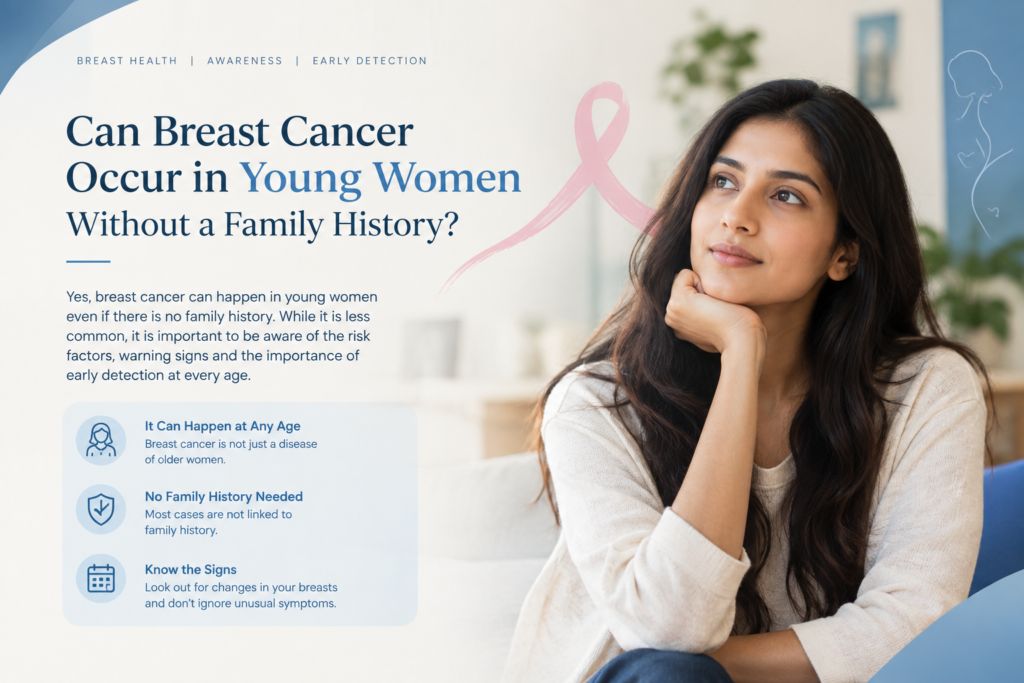
Can Breast Cancer Occur in Young Women Without a Family History?
Can Breast Cancer Occur in Young Women Without a Family History? Introduction Most women who develop breast cancer have no relatives with the disease. That may sound worrying, but knowing it is the first step toward staying one step ahead. The Family History Myth Many women think, “My mother and grandmother were fine, so I’m safe.” It’s an understandable belief, but it isn’t accurate. Only about 5 to 10 percent of breast cancers are linked to inherited gene changes, such as BRCA1 and BRCA2. The large majority happen in women with no family history at all. In my analytical view, this myth is one of the biggest reasons young women in cities like Ahmedabad delay getting a lump checked. They feel “low risk,” so they wait. Why Does It Happen Without a Family Link? Doctors don’t always find one clear cause. Usually, several small factors add up over the years. Some common ones are: Hormonal factors: Very early periods, late menopause, or never having breastfed can slightly change lifetime hormone exposure. Lifestyle: Long hours of sitting, little exercise, and weight gain, especially around the waist, may raise risk. Food habits: A diet heavy on processed and fried food and low on fibre, fruits, and vegetables does not help. Alcohol and smoking: Both are linked to a higher risk. Stress and poor sleep: They’re not direct causes, but they often go along with habits that affect health. Chance: Sometimes cells simply change without any clear reason. It isn’t anyone’s fault. Signs Worth Noticing You don’t need to check yourself with fear. Just get familiar with what is normal for you. Watch for: A new lump or thickening: It may feel hard, and it may or may not be painful. A change in shape or size: One breast may look different from before. Skin changes: Dimpling, redness, or an “orange peel” texture. Nipple changes: Pulling inward, unusual discharge, or crusting. Swelling in the underarm: A lump there can sometimes be an early sign. Most breast lumps turn out to be harmless, such as cysts or fibroadenomas. But only a proper check can tell you for sure, so don’t guess. Why Young Women Should Pay Attention In India, breast cancer is now the most common cancer among women, and a noticeable share of cases appear before the age of 50. In younger women, the cancer is sometimes found later, because neither the woman nor the doctor expects it. Screening mammograms usually start later in life, so awareness matters even more at younger ages. The encouraging part is that when breast cancer is found early, treatment is far more effective and often less intensive. What Does Treatment Look Like? Every case is different, so there is no single plan. A good breast cancer treatment plan is built around the type of cancer, its stage, and your personal goals, including future plans like having children. Here is a simple overview of the main options: Breast cancer surgery: This removes the tumour. It may be a lumpectomy (removing only the lump and a small margin) or a mastectomy (removing the breast). Many women can have breast-conserving surgery, and reconstruction is an option for others. Medical treatment: This includes chemotherapy, hormone therapy, and targeted therapy. These work throughout the body to lower the chance of the cancer returning. Radiation: It uses focused energy to destroy any remaining cancer cells in the breast area. A medical oncologist for women’s health care guides the medicine side of treatment and works closely with the surgeon and radiation team. It’s this teamwork that often makes the difference. Simple Steps You Can Start Today Small habits make a real difference. You can begin with these: Do a monthly self-check. Choose a fixed day, a few days after your period ends. Get a clinical breast exam. A yearly check with your doctor is a sensible habit, especially from your late twenties or thirties. Move your body. Aim for about 30 minutes of walking, yoga, or any activity you enjoy on most days. Eat balanced meals. Add more vegetables, fruits, and whole grains, and cut back on junk food. Limit alcohol, and avoid tobacco. Speak up early. If something feels different for more than a couple of weeks, get it checked. A Word of Reassurance Having no family history doesn’t mean you will get breast cancer, and it doesn’t mean you are fully protected either. It only means awareness should be part of your routine, like an eye test or a dental visit. If you’re in Ahmedabad and notice any change, or simply want to understand your personal risk, consider speaking to a specialist such as Dr Manasi Shah. A timely conversation can bring clarity, and clarity brings peace of mind.