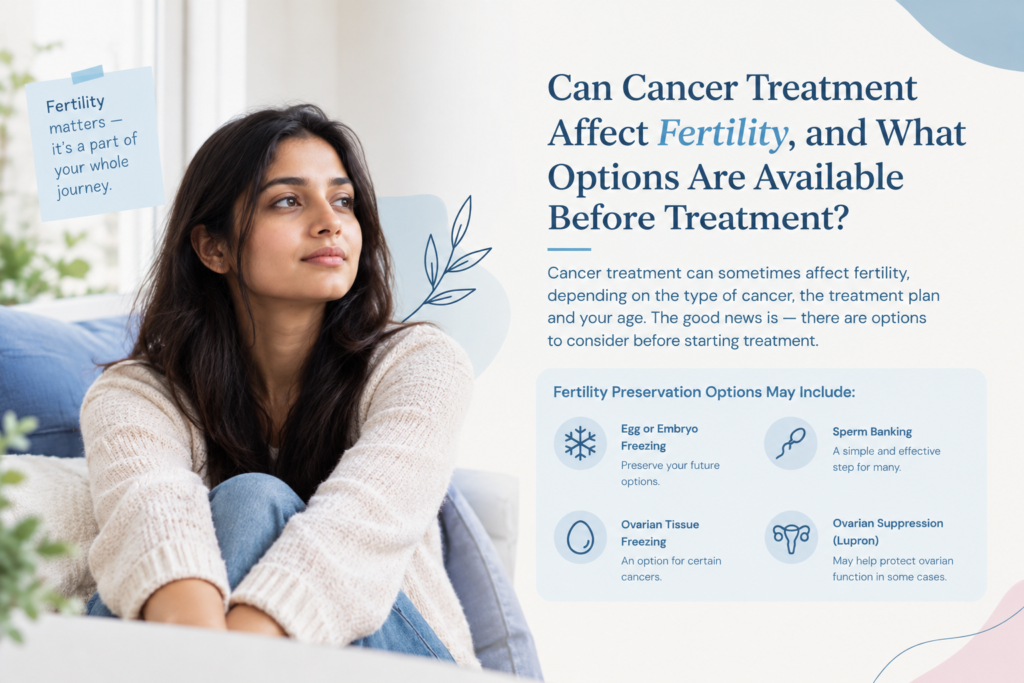
Can Cancer Treatment Affect Fertility, and What Options Are Available Before Treatment?
Can Cancer Treatment Affect Fertility, and What Options Are Available Before Treatment? Introduction For many young women, a cancer diagnosis brings a second worry right behind the first: “Will I still be able to have a baby?” It’s a very natural question, and the good news is that you have more options today than ever before. The Short Answer Yes, some cancer treatment can affect fertility, but not always, and not for everyone. The effect depends on the type of treatment, the dose, your age, and your health before treatment begins. In my analytical view, fertility is one of the most under-discussed topics in cancer care in India. Many women never ask about it, simply because they don’t know they can. The best time to talk about it is before treatment starts, not after. How Treatment Can Affect Fertility Different treatments work in different ways, so the impact is not the same for everyone. Here is a simple breakdown: Chemotherapy: Some medicines can reduce the number of eggs in the ovaries. Younger women often recover better, but periods may stop for a while or, in some cases, permanently. Hormone therapy: Common in breast cancer treatment, it is usually taken for five to ten years. Pregnancy is not advised during this time, which means plans may need to be delayed. Radiation: If given near the pelvis, it can affect the ovaries or the womb. Radiation to the breast area has a much smaller effect on fertility. Surgery: Procedures involving the ovaries or womb directly affect fertility. Breast cancer surgery, however, does not harm the ability to conceive, though it may affect breastfeeding on the operated side. Age matters a lot here. Women in their twenties and early thirties generally have a better chance of keeping their fertility than women closer to forty. Talk Before You Start The most important step is a conversation with your care team before the first dose of treatment. A Medical Oncologist who focuses on women’s care will explain how your specific plan may affect your future pregnancy plans. Many women feel awkward bringing this up, especially when everything feels urgent. Please don’t. Dr. Manasi Shah understand that a cancer plan is not only about the disease. It is also about the life you want to return to afterwards. Most of the time, there is enough time to explore fertility options without delaying treatment in a risky way. Your doctor will guide you on that. Fertility Options Available Before Treatment There are several ways to protect your chances of becoming a mother later. Each has its own purpose: Egg freezing: Eggs are collected after a short course of hormone injections and stored for future use. It usually takes about two weeks. Embryo freezing: Eggs are fertilised with a partner’s or donor’s sperm and the embryos are stored. This has a slightly higher success rate but needs a partner or donor. Ovarian tissue freezing: A small piece of ovary is removed and stored, then replaced after treatment. It is newer and suits certain situations, such as when treatment can’t wait. Ovarian protection medicines: Certain injections given during chemotherapy may help protect the ovaries. They don’t work for everyone, but they are a useful option. A fertility specialist usually works alongside your cancer team to choose what suits you best. In a city like Ahmedabad, many reputed fertility centres work closely with oncology teams for exactly this reason. Can You Get Pregnant After Cancer Treatment? For many women, yes. Some regain regular periods months after treatment ends, and many go on to have healthy pregnancies. Research so far suggests that pregnancy after breast cancer does not make the cancer return in most women, though the right timing should always be decided with your doctor. Usually, doctors suggest waiting a few years after treatment. This gives your body time to heal and lets the team check that all is well first. Even if natural pregnancy isn’t possible, there are still paths to parenthood, such as using stored eggs or embryos, donor eggs, surrogacy, or adoption. A Few Practical Tips Ask early: Raise the fertility question at your very first oncology visit. Keep records: Note down the drugs and doses you receive, as they help fertility doctors later. Don’t rely on periods alone: Regular periods don’t always mean fertility is normal, so get tested if you plan a pregnancy. Use contraception during treatment: Pregnancy during cancer treatment can be risky, so use a safe method your doctor approves. Look after your mind: Worry about fertility is common. Counselling can really help. You Are Not Alone in This A cancer diagnosis does not have to mean giving up on your dreams of a family. With early planning and the right guidance, many women protect their options and go on to live full, happy lives. If you are in Ahmedabad and want to discuss your treatment and fertility plans together, consider speaking to Dr. Manasi Shah. A timely, caring conversation can make all the difference.